
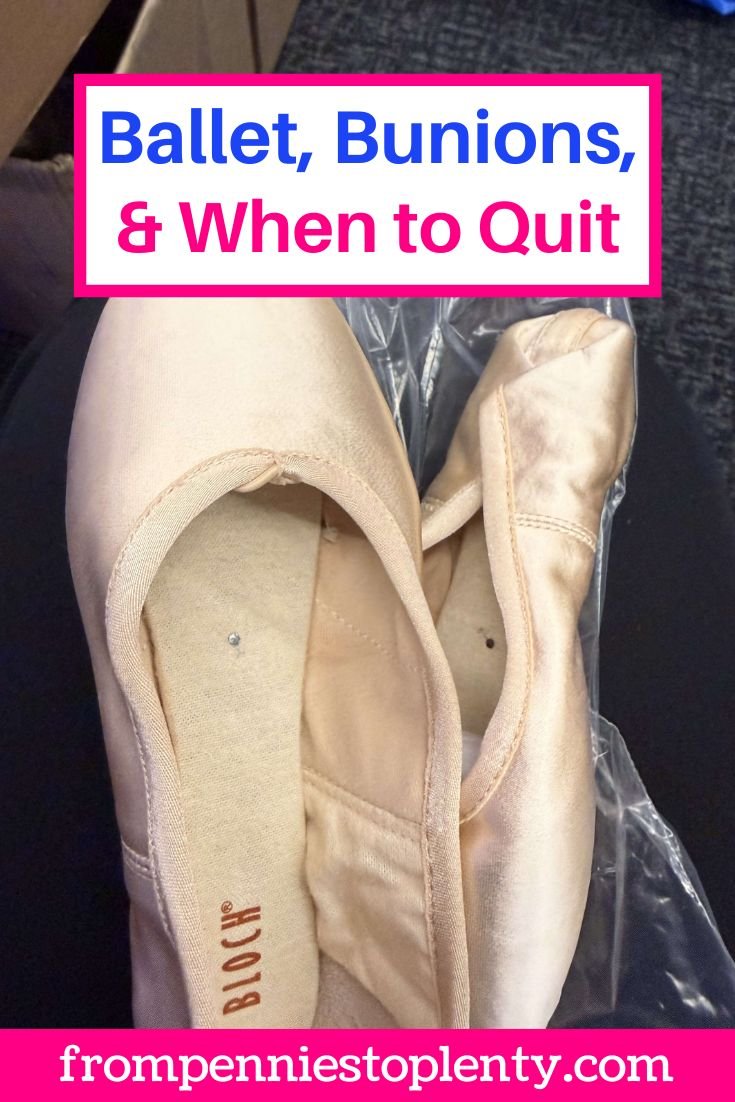
Ballet, Bunions, and When to Quit
My patients often tell me, "Don't get old."
I haven’t had much physically affect me over the years. That was until a recent visit to the podiatrist, where I was diagnosed with a bunion and told to quit ballet.
That recommendation has been on my mind ever since. I'm now trying to figure out how to manage my foot and ultimately, whether continuing ballet is worth the potential consequences.
I Already Knew the Answer
A few years ago, I noticed that my big toes were starting to angle toward my other toes. Someone in dance class mentioned having bunions while we were waiting around before class, which prompted me to take a closer look at my own feet.
I started using a toe spacer between my big toe and second toe after that. I also tried stretching my toes in the opposite direction for a while, but that ended up hurting, so I stopped.
Recently, a coworker with a bunion told me that she'd gone to a podiatrist and was advised to stop running. She runs many miles a week and was even training for a half or full marathon. When I saw her feet, I thought I should probably get mine checked out too.
I’d been having some mild discomfort in my right foot, nothing major, but I knew it was probably due to a bunion. I notice some discomfort when I walk, although it’s partly because I have more awareness of it now, otherwise it might not even register.
The discomfort is most noticeable in pointe shoes. I’d been having some trouble with the big toe of my right foot for probably the past year or so. It’s nothing I couldn’t work through and continue on with class, but I knew it wasn’t normal.
I already suspected ballet was contributing to my problem, so I knew there was a good chance the podiatrist would tell me to stop doing it. I just hoped he would tell me otherwise.
The Diagnosis
The verdict: a bunion (genetic in origin), but ballet is worsening it. I have some bone spurs forming on a joint, and the cartilage is wearing down and becoming arthritic.
His recommendation was to stop doing ballet. I asked what about in soft shoes on flat. Well, I should stop doing calf raises, which is nearly everything in ballet.
I was also told to stop doing planks on my toes and do them from my knees instead.
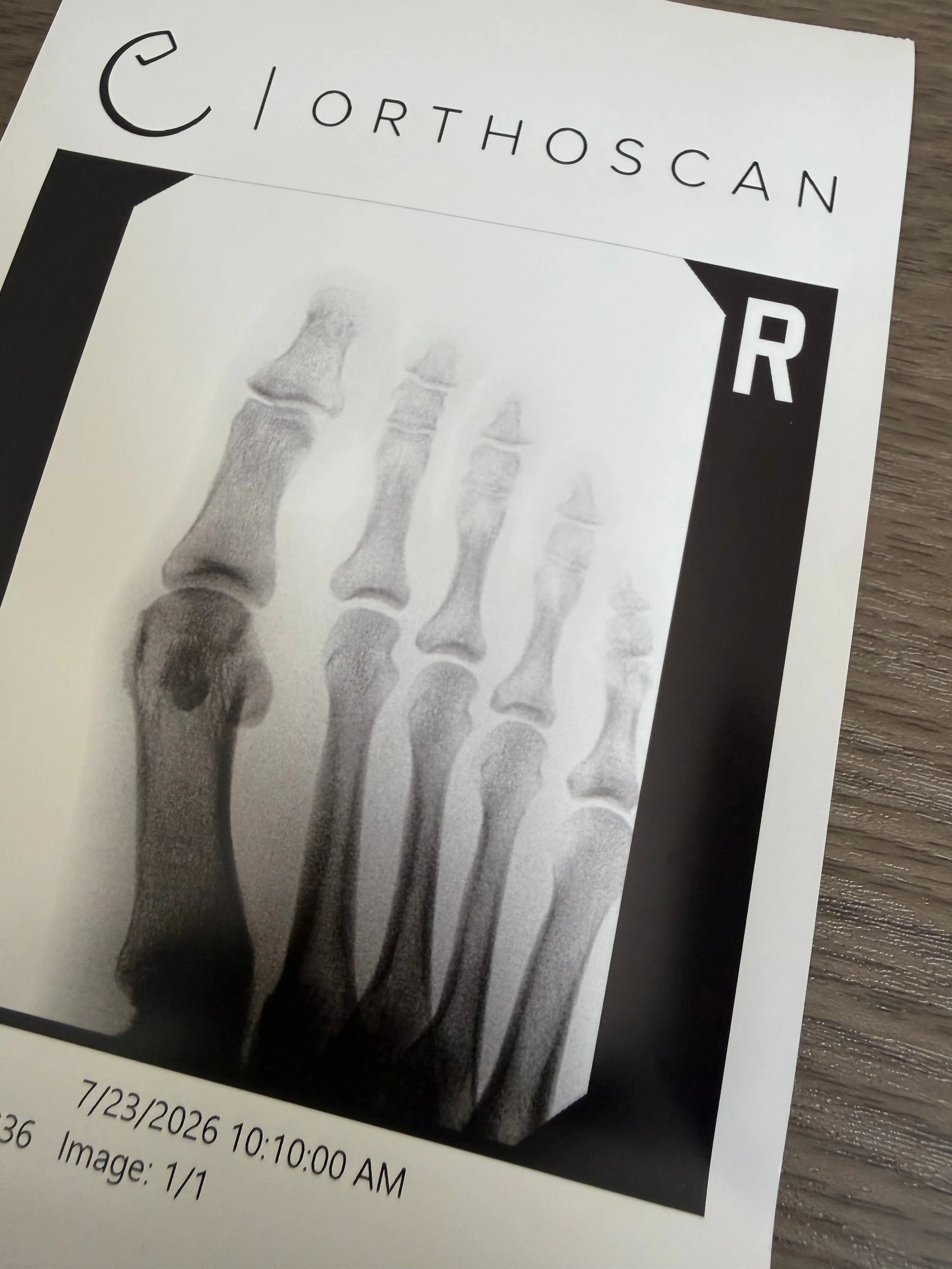
My foot x-ray
Why This Is So Hard
When I was in my 20s, ballet was simply a hobby. It was a fun and healthy way to move. I socialized with other dancers and enjoyed spending my time doing something I loved. I didn't think much beyond that.
Now ballet means so much more.
As I get older, I think of everything in terms of my long-term health and setting myself up to age well. Leg strength is a major influencer of long-term health and longevity.
Your calves are your second heart. And weight-bearing, strength, and osteoblastic exercise is essential for women to preserve bone density through peri-menopause and beyond.
The podiatrist said I could still do squats, but squats target muscle, not bone maintenance and growth.
But the physical benefits aren't the only reason I don't want to give it up.
I love the community I've found with other dancers. I like doing creative things. I like working toward something difficult and slowly getting better at it. I like having something in my life that challenges me physically and mentally.
Ballet gives me all of that.
So I'm not ready to give it up yet, even knowing that continuing could worsen my bunion and arthritis and potentially contribute to needing surgery someday.
This is the debate I've been having internally (and sometimes out loud): Do I protect my joints, or do I continue doing something that contributes so much to my quality of life?
I want to continue dancing happily. But I also don't want to end up with debilitating foot problems that affect my mobility, especially as I grow older.
I don't think there's a perfect answer.
So what do I do now that the damage has been done, but I’m not ready to stop dancing?
What I’m Trying
Right now I’m trying to do what I can to manage the bunion and associated damage and prevent it from getting any worse.
1 | Kinesiology tape
I watched this YouTube video about how to tape the foot to stabilize the first metatarsophalangeal joint. Hopefully it will reduce joint movement and provide more support when I’m dancing.
2 | Modifying class
I’ve started doing fewer releves, particularly in center. Recently I skipped grand allegro when I felt my foot start to bother me.
I avoid certain exercises that put a lot of repetitive stress on the joint. I did a full pointe class the other day. It wasn’t painful really. There was a mild discomfort. It felt like bone grating, which was rather dull, rather than muscular pain.
Doing certain exercises like doing repeated half to full releves during warm-up were hard on my toe. I didn’t do any hops on one leg either.
What was interesting was that I didn't feel like I was dancing poorly. In fact, I felt like I danced as well as I ever have.
But my joint and toe ached (mildly) for several days afterward.
So it confirmed that I shouldn’t continue doing things just because I can.
3 | Outside of ballet
My podiatrist recommended wearing shoes with firm soles such as Asics, Brooks, and Birkenstocks. He doesn't want me wearing shoes that are very soft or bend easily at the ball of the foot.
He specifically advised against Skechers and On Cloud shoes and said Crocs are a little too soft.
I've ordered orthotics that should arrive in a few weeks, so I'll give those a try and see whether they make a difference.
I have several toe spacers that I've used intermittently. I'm going to start using them again and see how my feet feel.
Fortunately, I picked up swimming as a hobby a year or two ago. I usually swim two or three days a week, and with this foot issue, I'm spending more time in the pool because it's easier on my joints.
I'm careful about how I move around in the pool and push off the wall so I don't unnecessarily push off my right foot and aggravate it, but even swimming can bother my foot if I’m not careful.
What I’m Not Trying
There are a couple of things I've considered but don’t plan to do right now because I don't expect them to make a significant difference.
1 | Different ballet shoes
The thought crossed my mind that maybe I should get refitted for different pointe shoes that might fit my feet better.
The shoes I wear now fit my feet very closely like a glove. I was once recommended to size up, but I didn't like how the shoes felt, especially because shoes provide less support once you dance in them and they start breaking down.
Over the past year, I've tried several other shoes at the dancewear store. I've also tried new pairs of my current shoe to see if they would support me better.
I always noticed the big toe on my right foot felt strange like it was touching the floor with no padding or shoe underneath it. It must have been the angle of the toe due to bunion already causing a problem.
I don't have this bunion problem with my left foot, so I don't think my pointe shoes are the main issue.
2 | Strength work
One of the things that surprised me when I started searching online for information about ballet and bunions was how much of the advice focused on stretching and strengthening.
Those things might help with symptoms, and I'm not arguing against strengthening, but I wanted something more than "strengthen your feet" because strengthening isn't going to reverse anatomical changes that have already occurred.
I think my feet and legs are reasonably strong after years of ballet. Of course I could do more and probably some targeted exercises, but I don't expect strengthening exercises to correct the underlying problem as the bone and cartilage damage are irreversible.
The Psychological Aspect
While searching online, I didn’t find a lot of in-depth scientific information about bunions specifically related to ballet and pointe work. I didn’t find in-depth first-person accounts from dancers who have bunions either.
I wanted to hear other dancers’ stories.
How did you feel after your diagnosis?
What helped you manage their bunions?
How did you decide whether to continue or quit dancing?
How much progression of the bunion and arthritis is an acceptable trade-off?
How do you weigh your quality of life today against your future health?
When did you decide to quit?
I want to hear from other dancers who have gone through this. I want to know the debate that went on in your head, what you tried, what mattered to you, what ultimately made you decide to continue or quit, and how things turned out months or years later.
What’s Next
I’m not ready to give up ballet without first trying to adapt. I’m going to take my podiatrist’s recommendations and do the other things I mentioned above. Then I’ll re-evaluate in 6 months.
Maybe I'll find that I can continue dancing with some modifications. Maybe I'll eventually have to make a much bigger decision of whether to quit completely or not.
I don’t think I’ll ever completely stop doing ballet, but I’m coming around to the idea that ballet will have to change for me and that I’m unlikely to meet some of the goals I made for myself.
If pointe work and ballet really are not meant to be part of my future, I’ll find other ways to fill that space in my life. Thankfully, I don’t have to decide just yet.